Published by:
CGP EDU Academic Team
Published on: September 12, 2026
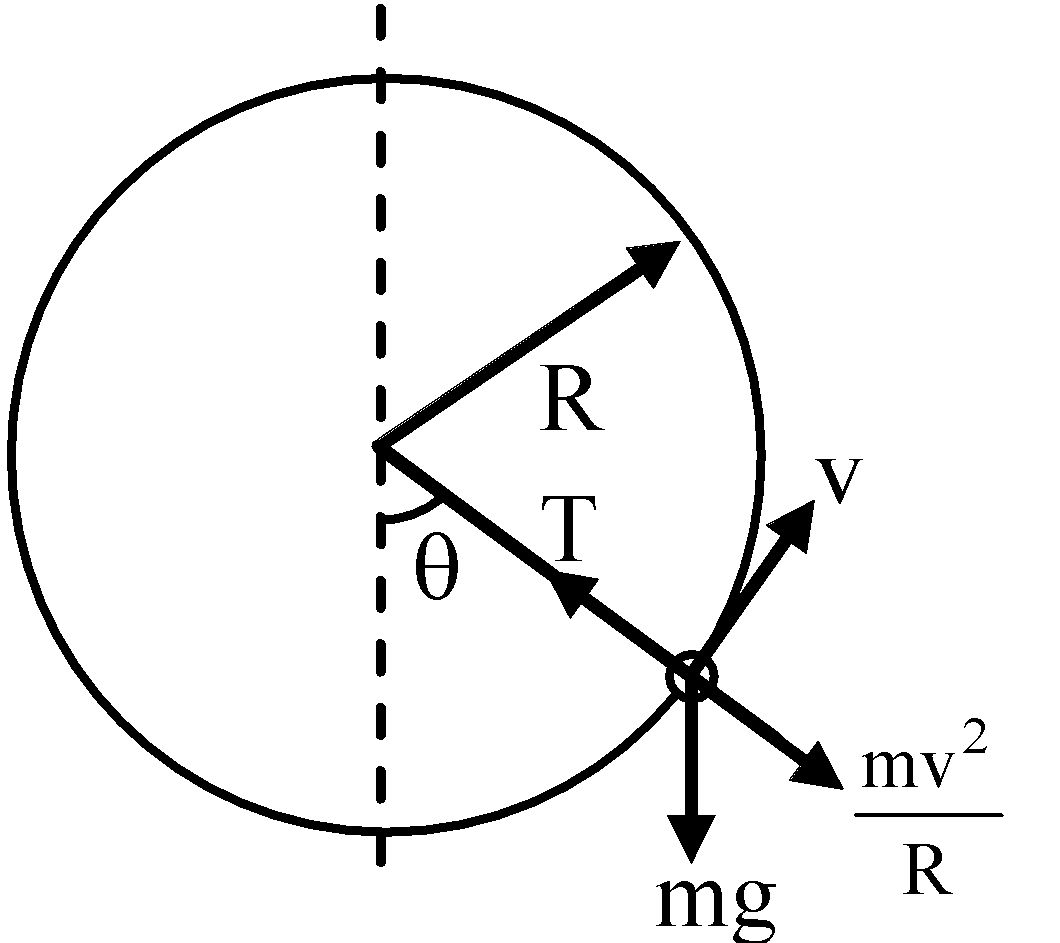
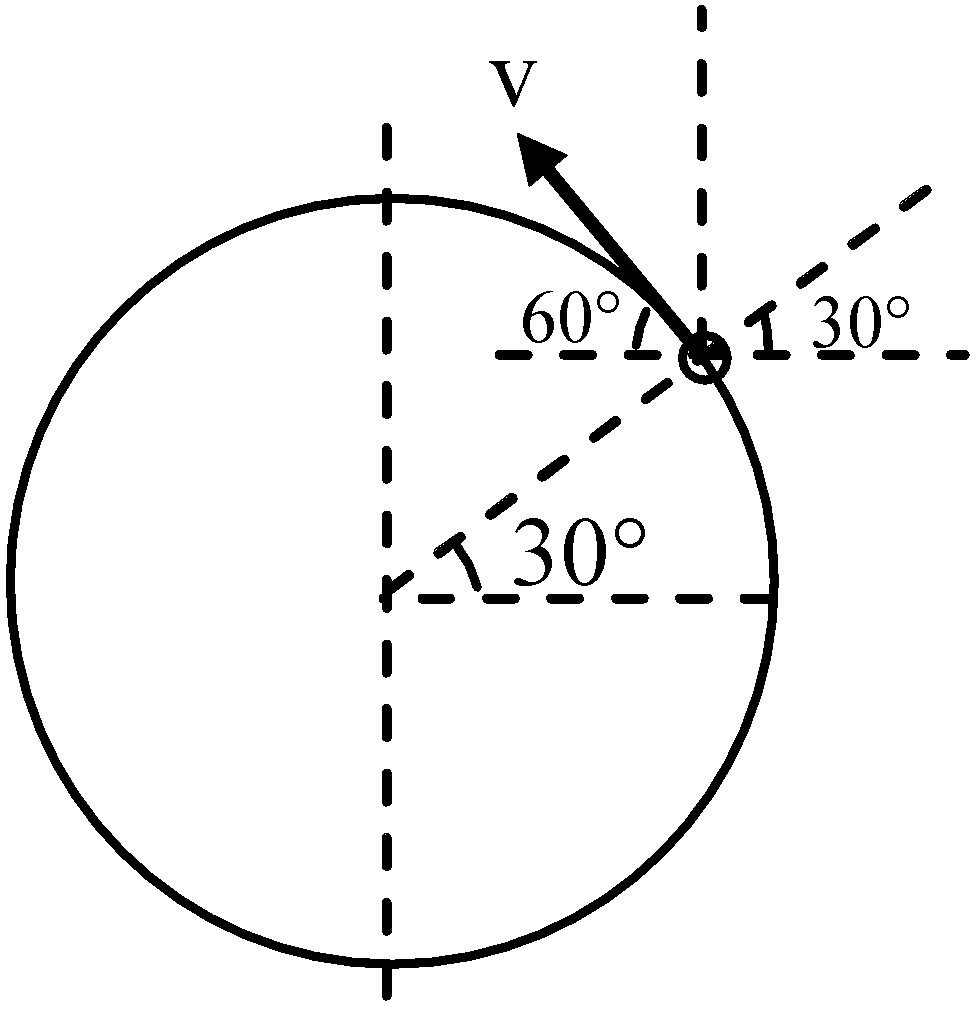
A pendulum of length 3.2 m is free to rotate in a vertical circle. Let the velocity of pendulum at its lowest position be v 0 then match the following-
Column – I | Column – II |
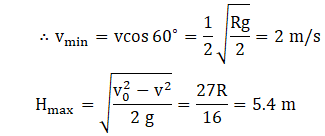
(i) If v0 = 4m/s, maximum height attained by pendulum (in meter) | [A] Zero |
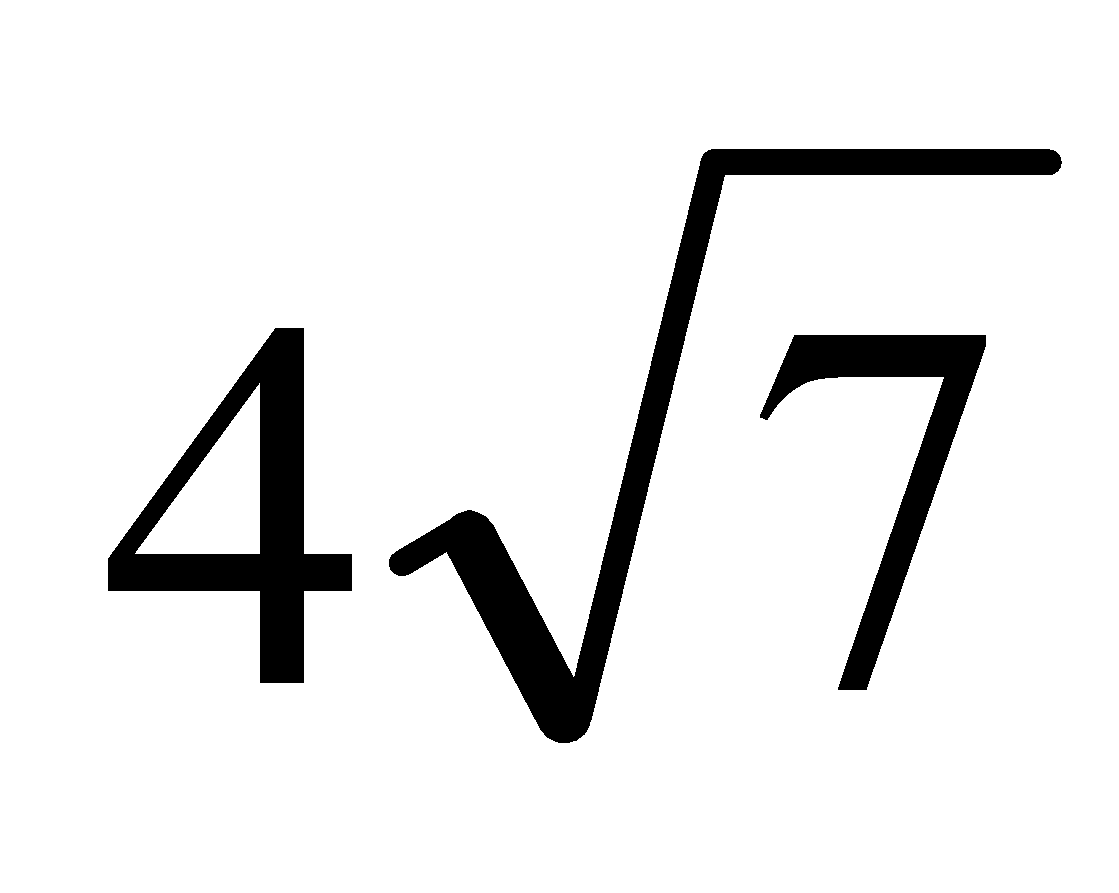
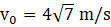
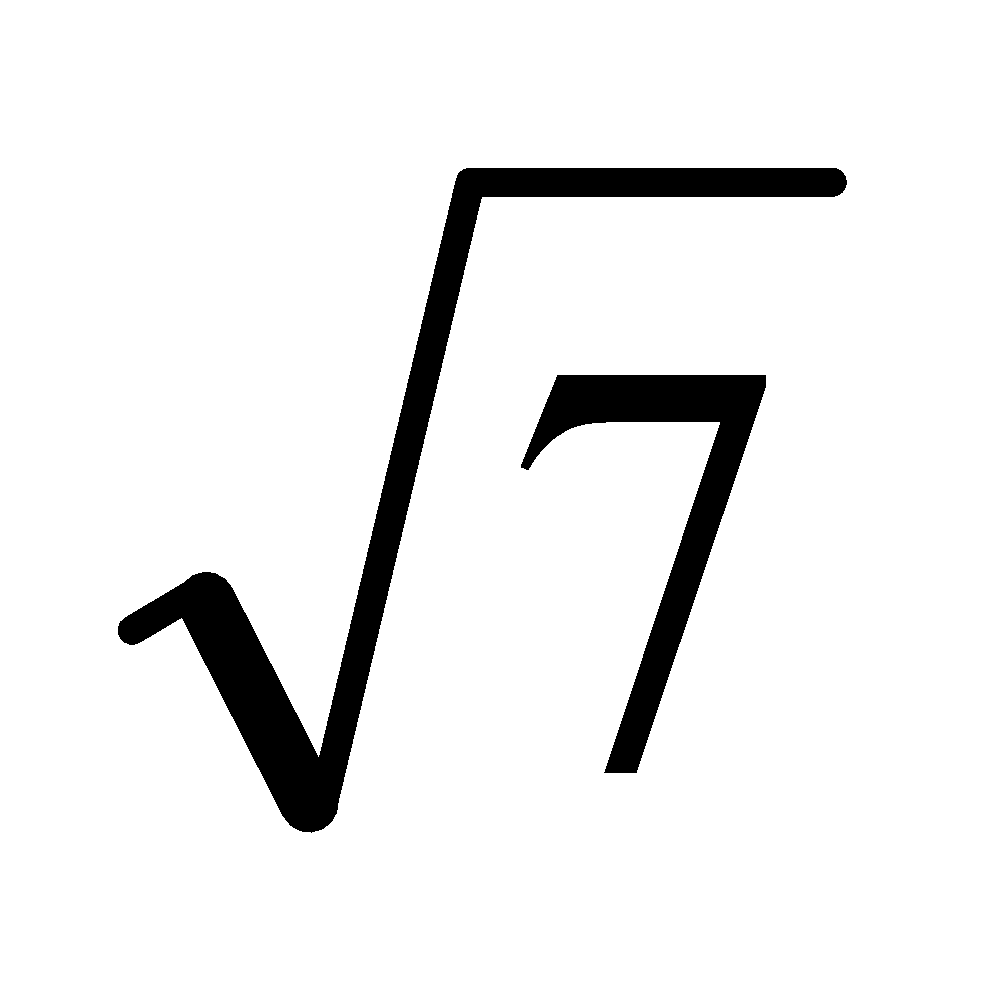
(ii) If v0 = m/s, minimum velocity of pendulum (in meter/sec) | [B] 2 |
(iii) If v0 = 8 m/s, maximum height attained by pendulum (in meter) | [C] 3.2 |
(iv) If v0 = 8 m/s, minimum velocity of pendulum (in meter/sec) | [D] 5.4 |
Correct Matrix Matching
Text Solution
Verified by ExpertsThe correct answer is:
A
Step 1: Analyzing the maximum height attained by the pendulum when starting at its lowest point with velocity \( v_0 \). The height attained can be calculated using conservation of energy.
The potential energy at height \( h \) is given by \( PE = mgh \). The kinetic energy at the lowest point is given by \( KE = \frac{1}{2} mv_0^2 \).
On reaching the maximum height, all kinetic energy is converted into potential energy:
\( \frac{1}{2} mv_0^2 = mgh \)
Canceling mass (m), we have: \( \frac{1}{2} v_0^2 = gh \)
Rearranging gives: \( h = \frac{v_0^2}{2g} \)
For \( v_0 = 4 \, m/s \): \( h = \frac{4^2}{2 \times 9.8} = \frac{16}{19.6} \approx 0.816 \, m \)
Thus, for Option (i), the maximum height is not zero.
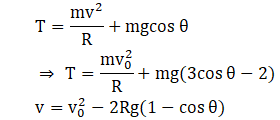
Step 2: Finding the minimum velocity at the highest point. For a pendulum to just maintain a circular path, the minimum velocity \( v_{min} \) at the top needs to be calculated using the centripetal force required: \( \frac{mv_{min}^2}{L} = mg \) which leads to \( v_{min} = \sqrt{gL} \).
Using \( g \approx 9.8 \, m/s^2 \) and \( L = 3.2 \, m \): \( v_{min} = \sqrt{9.8 \times 3.2} \approx 5.57 \, m/s \). For \( v_0 = 4 \, m/s \), the minimum velocity does not contribute.
Thus the correct matches are:
(i) Zero [A], (ii) 2 [B], (iii) 3.2 [C], (iv) 5.4 [D].
Therefore, the correct option for (i) is [A].
The potential energy at height \( h \) is given by \( PE = mgh \). The kinetic energy at the lowest point is given by \( KE = \frac{1}{2} mv_0^2 \).
On reaching the maximum height, all kinetic energy is converted into potential energy:
\( \frac{1}{2} mv_0^2 = mgh \)
Canceling mass (m), we have: \( \frac{1}{2} v_0^2 = gh \)
Rearranging gives: \( h = \frac{v_0^2}{2g} \)
For \( v_0 = 4 \, m/s \): \( h = \frac{4^2}{2 \times 9.8} = \frac{16}{19.6} \approx 0.816 \, m \)
Thus, for Option (i), the maximum height is not zero.
Step 2: Finding the minimum velocity at the highest point. For a pendulum to just maintain a circular path, the minimum velocity \( v_{min} \) at the top needs to be calculated using the centripetal force required: \( \frac{mv_{min}^2}{L} = mg \) which leads to \( v_{min} = \sqrt{gL} \).
Using \( g \approx 9.8 \, m/s^2 \) and \( L = 3.2 \, m \): \( v_{min} = \sqrt{9.8 \times 3.2} \approx 5.57 \, m/s \). For \( v_0 = 4 \, m/s \), the minimum velocity does not contribute.
Thus the correct matches are:
(i) Zero [A], (ii) 2 [B], (iii) 3.2 [C], (iv) 5.4 [D].
Therefore, the correct option for (i) is [A].
Prepare Smarter with CGP Edu
Get practice questions, solutions, and test series in one place.
Write a Review
Share your experience with this question and solution.
Commentary
Send your comment, doubt, correction, or feedback to admin.
Similar Questions
Explore conceptually related problems
A body of mass \(\pi\pi\) hangs at one end of a string of length l , the other end of which is fixe…
The tension in the string revolving in a vertical circle with a mass m at the end which is at the l…
A stone of mass m is tied to a string and is moved in a vertical circle of radius r making n revolu…
A tube of length l is filled completely with an incompressible liquid of mass \(\mathbf{M}\) and cl…
The kinetic energy k of a particle moving along a circle of radius R depends on the distance covere…
A car is moving in a circular horizontal track of radius 10 m with a constant speed of 10 m/sec . A…